What is the capital of Portugal? Lisbon facts, history and living there
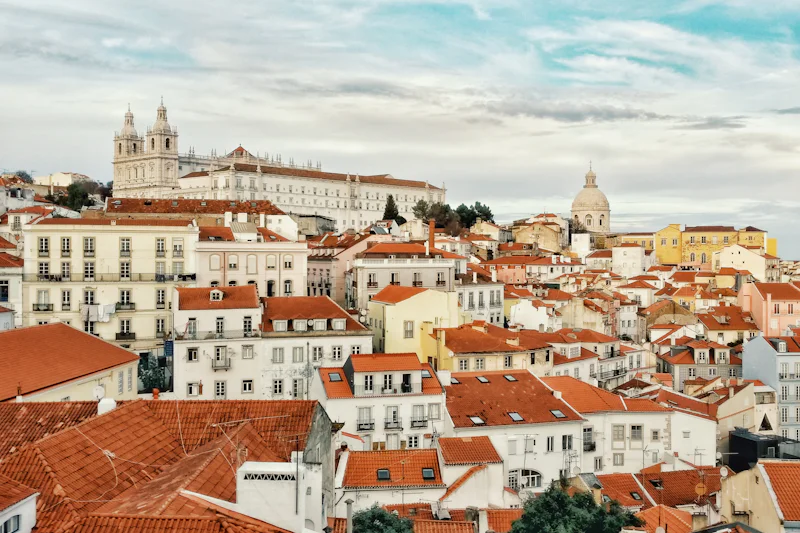
The capital of Portugal is Lisbon (Lisboa in Portuguese). It's the country's largest city, its political and economic centre, and home to the government, parliament and the President of the Republic.
Lisbon sits on the north bank of the Tagus River (Rio Tejo) where it meets the Atlantic Ocean, on the country's west coast. It's one of the oldest cities in Western Europe – often said to be older than London, Paris or Rome.
Lisbon at a Glance
| Country | Portugal |
| Portuguese name | Lisboa |
| Population (city) | Around 550,000 |
| Population (metro area) | Around 2.9 million |
| River | Tagus (Tejo) |
| Capital since | 13th century |
| Nickname | City of Seven Hills |
| Airport | Humberto Delgado Airport (LIS) |
| Time zone | WET (UTC+0), WEST in summer (UTC+1) |
| Patron saint | Saint Vincent (festivities honour Saint Anthony in June) |
Why Is Lisbon the Capital of Portugal?
Lisbon's position made it the natural choice. Its deep, sheltered harbour on the Tagus estuary made it Portugal's main port, and its size and wealth grew with trade.
Interestingly, no specific law formally declares Lisbon the capital – it became the capital by tradition and has been recognised as such for centuries. The Portuguese Constitution simply places the main organs of state there.
A short history
- Ancient times: settled by Phoenicians and later the Romans, who called it Olisipo.
- 711–1147: under Moorish rule (as al-Ushbuna).
- 1147: conquered by Portugal's first king, Afonso Henriques, with the help of crusaders.
- Mid-13th century: became the capital, replacing Coimbra, under King Afonso III.
- 15th–16th centuries: the Age of Discoveries made Lisbon one of the richest cities in the world.
- 1755: a devastating earthquake, tsunami and fire destroyed much of the city. The Marquis of Pombal rebuilt the Baixa district with a grid plan and some of the world's first earthquake-resistant buildings.
- 1974: the Carnation Revolution ended the Estado Novo dictatorship.
- 1998: Lisbon hosted Expo '98, transforming the eastern riverside (Parque das Nações).
What Were Portugal's Former Capitals?
Lisbon hasn't always been the capital. Over its history, Portugal has had several:
| Capital | Period | Why |
|---|---|---|
| Guimarães | 12th century | Known as the "birthplace of Portugal" – the county seat of Afonso Henriques |
| Coimbra | c. 1131–1255 | Capital of the early kingdom |
| Lisbon | 1255–today | Political, economic and trade centre |
| Rio de Janeiro (Brazil) | 1808–1821 | The royal court fled Napoleon's invasion to Brazil |
| Angra do Heroísmo (Azores) | 1830–1833 | Seat of the liberal government during the Liberal Wars |
Rio de Janeiro is the only time a European colonial power had its capital outside Europe – an unusual fact that often comes up in quizzes.
Is Porto the Capital of Portugal?
No. Porto is Portugal's second-largest city and the main city of the north. It's often confused with the capital because of its fame (and its port wine), but the capital is Lisbon. Locals sometimes call Porto the "capital do Norte" (capital of the north).
Key Facts About Lisbon
- City of Seven Hills: like Rome, Lisbon is built on hills – walking is a workout.
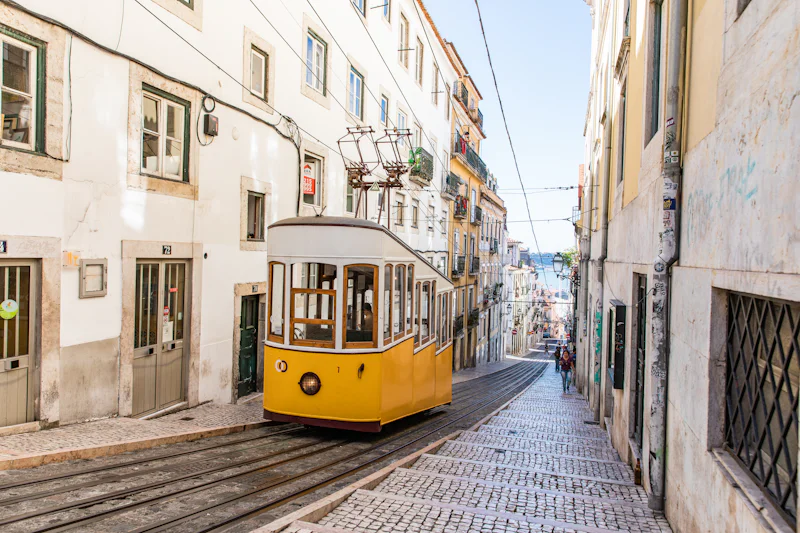
- Trams: the yellow Tram 28 is one of the city's icons.
- Fado: the melancholic music recognised by UNESCO was born in Lisbon's old neighbourhoods like Alfama and Mouraria.
- Pastel de nata: the famous custard tart comes from Belém (more Portuguese food).
- Westernmost capital of mainland Europe.
- 25 de Abril Bridge looks like San Francisco's Golden Gate and was built by the same company that built the Bay Bridge.
- Vasco da Gama Bridge is one of the longest bridges in Europe (over 12 km).
- UNESCO sites: Jerónimos Monastery and Belém Tower.
Top Things to See in Lisbon
- Alfama – the oldest neighbourhood, with narrow streets and fado houses
- Castelo de São Jorge – the castle above the city
- Belém – Jerónimos Monastery, Belém Tower and Pastéis de Belém
- Baixa and Praça do Comércio – the rebuilt downtown on the river
- Bairro Alto and Chiado – shopping by day, nightlife by night
- Miradouros – viewpoints like Senhora do Monte and Santa Luzia
- LX Factory – creative hub in a former industrial complex
- Parque das Nações – modern riverside and the Oceanário
- Day trips to Sintra, Cascais and Cabo da Roca
Living in Lisbon: Pros and Cons
Lisbon has become one of Europe's most popular cities for expats, remote workers and retirees. Here's an honest look.
Pros
- Mild climate with lots of sunshine – around 300 sunny days a year
- Safe compared to most European capitals
- Beaches within 20–30 minutes (Cascais, Costa da Caparica)
- Great food and a lively café culture
- Large international community, English widely spoken
- Good public transport and an airport inside the city
- Strong startup and tech scene
Cons
- High rents relative to Portuguese salaries (see how to rent a flat)
- Old housing – many flats are damp and lack heating or insulation
- Bureaucracy can be slow
- Hills and cobblestones – tough for people with reduced mobility or strollers
- Tourist crowds in central areas
- Salaries are lower than in other Western European capitals
Cost of living (approximate, 2026)
| Expense | Cost |
|---|---|
| 1-bedroom flat (central) | €1,200–€1,600/month |
| 1-bedroom flat (outskirts) | €900–€1,300/month |
| Utilities | €80–€150/month |
| Navegante monthly transport pass | €30–€40/month* |
| Coffee | €0.80–€1.20 |
| Lunch menu (prato do dia) | €10–€14 |
*Check current Navegante prices; discounts apply for young people and seniors.
Final Thoughts
Lisbon is the capital of Portugal and has been for nearly 800 years. It's a city of hills, river views, history and good food – and, increasingly, a place people choose to live. Whether you're visiting for a weekend or considering a move, it's well worth getting to know beyond the quiz answer.
Need help?
Official bodies and services related to this guide. Sponsored listings are always labelled.
- Official Tourism & travel info
Visit Portugal (Turismo de Portugal)
The national tourism board's official guide to regions, events and trip planning across mainland Portugal, Madeira and the Azores.
- Languages
- Portuguese, English
- Where
- Nationwide · online
- Official Tourism & travel info
Visit Lisboa
The Lisbon tourism association's official visitor guide, including the Lisboa Card and city events.
- Languages
- Portuguese, English
- Where
- Lisbon
Frequently asked questions
What is the capital of Portugal?
Lisbon.
What was the first capital of Portugal?
Guimarães is considered the birthplace of Portugal, and Coimbra was the capital of the early kingdom before Lisbon.
Is Porto the capital of Portugal?
No. Porto is the second-largest city; Lisbon is the capital.
When did Lisbon become the capital?
In the mid-13th century, during the reign of King Afonso III.
Was a non-European city ever Portugal's capital?
Yes. Rio de Janeiro was the capital of the Portuguese Empire from 1808 to 1821.
What river runs through Lisbon?
The Tagus (Tejo), which flows into the Atlantic Ocean.
How do you say Lisbon in Portuguese?
Lisboa (pronounced roughly "leezh-BOH-ah").
Official sources
We check our guides against these official pages. If something has changed, the official source wins.
- Visit Lisboa visitlisboa.com
- Câmara Municipal de Lisboa lisboa.pt
Related guides
How to get from the airport to the city in Portugal: Lisbon, Porto, Faro and Madeira
How to get from the airport to the city in Portugal: metro, bus, taxi and Uber from Lisbon, Porto, Faro and Madeira airports, with prices and journey times.
How to rent a flat in Portugal: a step-by-step guide for foreigners
How to rent a flat in Portugal: where to search, documents, deposit and advance rent, the lease, tenant rights, typical rents and scams to avoid.
Portuguese food: 30 traditional dishes to try in Portugal
A local's guide to traditional Portuguese food: the best dishes, desserts, pastries and coffee to try in Portugal, plus regional specialities and eating tips.
How to get around Portugal: trains, buses and driving
How to travel around Portugal: CP trains and the Passe Ferroviário Verde, intercity buses and tickets, driving and tolls, city transport, flights and ferries.
Nazaré, Portugal: when to visit, beaches and the biggest waves in the world
Plan a visit to Nazaré, Portugal: when to see the giant waves at Praia do Norte, the best beaches, things to do, getting there from Lisbon and where to stay.
Interesting Facts About Portugal: 25 Things You Should Know
25 interesting facts about Portugal: Europe's oldest borders, the world's oldest alliance, cork, giant waves, pastel de nata, fado and more.