Interesting Facts About Portugal: 25 Things You Should Know
Portugal is small – about 92,000 km² and around 10.6 million people – but it has had an outsized influence on the world. It started the Age of Discovery, spread its language across four continents and gave Europe tea-drinking, Japan tempura and the world its favourite custard tart.
Here are 25 facts about Portugal that are worth knowing, whether you're visiting for a week or moving for good.
In short:
- Portugal has some of the oldest borders in Europe and the oldest diplomatic alliance still in force.
- It produces about half the world's cork.
- Nazaré has some of the biggest surfable waves on Earth.
- Portuguese is spoken by more than 250 million people.
- The country has two officially recognised languages: Portuguese and, locally, Mirandese.
History and politics
1. Portugal has some of the oldest borders in Europe
Portugal's mainland borders were largely fixed by the Treaty of Alcañices in 1297, making them among the oldest stable national borders in Europe. Portugal itself became an independent kingdom in the 12th century, recognised by the Pope in 1179.
2. It has the world's oldest alliance still in force
The Anglo-Portuguese Alliance dates back to the Treaty of Windsor (1386), building on an agreement of 1373. It's the oldest active diplomatic alliance in the world and was invoked as recently as the Second World War, when Britain was allowed to use bases in the Azores.
3. Portugal led the Age of Discovery
Portuguese navigators reached the Cape of Good Hope (Bartolomeu Dias, 1488), opened the sea route to India (Vasco da Gama, 1498) and reached Brazil (Pedro Álvares Cabral, 1500). Ferdinand Magellan, who led the first expedition to circle the globe, was also Portuguese.
4. The 1755 earthquake changed European thought
On 1 November 1755, a huge earthquake, followed by a tsunami and fires, destroyed much of Lisbon. It shook European philosophy too – Voltaire wrote about it – and led to one of the first examples of modern urban planning: the grid-shaped Baixa Pombalina, with buildings designed to resist earthquakes.
5. A revolution with flowers
On 25 April 1974, a largely bloodless military coup ended Europe's longest-lasting dictatorship of the 20th century. Soldiers put red carnations in their rifle barrels, giving the Carnation Revolution its name. 25 April is now a national holiday – see public holidays in Portugal.
6. Portugal once ruled from Rio de Janeiro
When Napoleon invaded in 1807, the Portuguese royal court fled to Brazil. For more than a decade, Rio de Janeiro was the capital of the Portuguese Empire – the only time a European empire was ruled from a colony.
Geography and nature
7. Cabo da Roca is the westernmost point of mainland Europe
A cliff near Sintra, Cabo da Roca marks the westernmost point of continental Europe. A monument there quotes Camões: "where the land ends and the sea begins".
8. Nazaré has some of the biggest waves on Earth
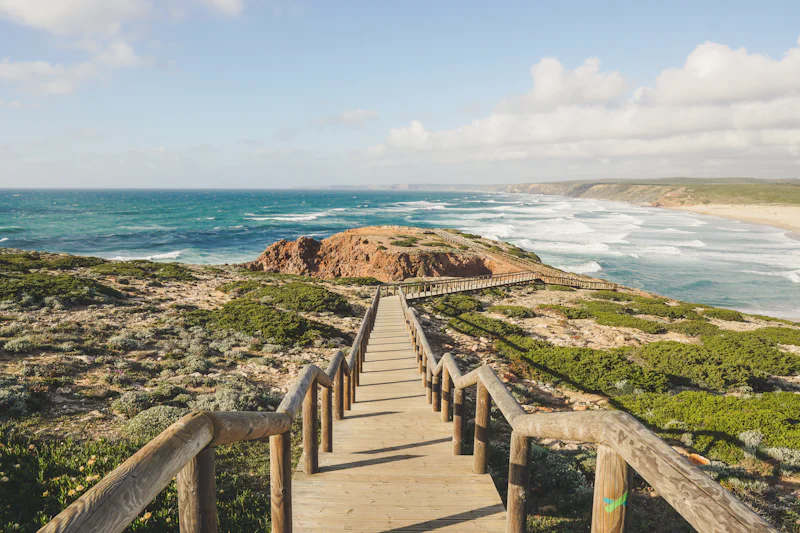
An underwater canyon off Nazaré funnels Atlantic swells into giant waves in winter. Several big-wave surfing world records have been set here, including a wave of more than 26 metres surfed by Sebastian Steudtner in 2020.
9. Portugal's highest mountain is on an island
Mount Pico in the Azores, at 2,351 metres, is Portugal's highest point – a volcano rising straight out of the Atlantic. On the mainland, the highest point is Torre in the Serra da Estrela (1,993 m).
10. The Algarve is one of the sunniest places in Europe
The Algarve enjoys around 3,000 hours of sunshine a year, putting it among the sunniest regions of Europe.
11. Portugal produces about half the world's cork
Portugal is the world's largest cork producer, with cork oak forests (montado) covering large parts of the Alentejo. Cork oaks are protected by law, and the bark can only be harvested every nine years without cutting the tree.
12. Europe's longest bridge was, for years, in Lisbon
The Vasco da Gama Bridge over the Tagus estuary is about 12.3 km long. When it opened in 1998, it was the longest bridge in Europe.
Language and culture
13. Portuguese is spoken on four continents
Portuguese is the official language of nine countries, including Brazil, Angola, Mozambique, Cape Verde and East Timor. With more than 250 million speakers, it's among the most widely spoken languages in the world – and the most spoken in the Southern Hemisphere.
14. Portugal has two officially recognised languages
Mirandese (mirandês), spoken around Miranda do Douro in the north-east, gained official recognition in 1999, for local matters in that area. Only a few thousand people speak it.
15. Fado is UNESCO-listed
Fado, the melancholy music of Lisbon and Coimbra, was added to UNESCO's Intangible Cultural Heritage list in 2011. It's closely tied to saudade – a feeling of longing that has no exact English translation.
16. Azulejos are everywhere
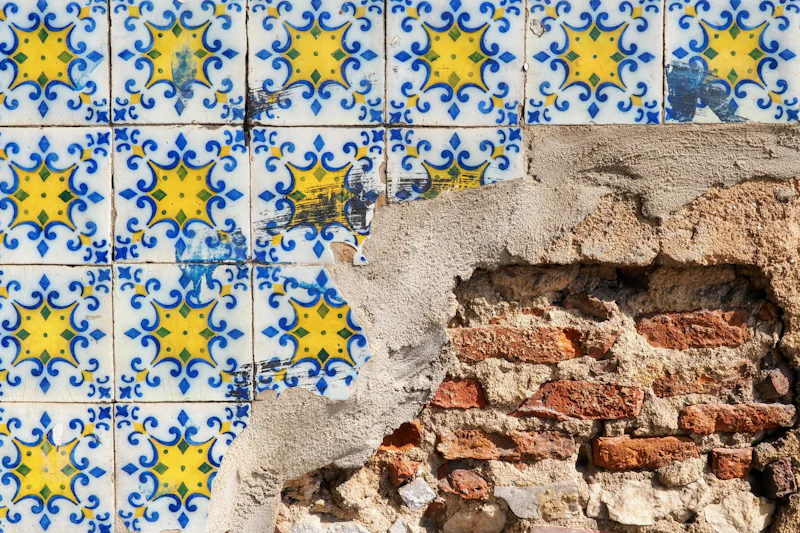
The painted ceramic tiles known as azulejos cover churches, train stations and house façades. Lisbon even has a museum dedicated to them, the Museu Nacional do Azulejo.
17. Lisbon has the world's oldest operating bookshop
Livraria Bertrand in Chiado, founded in 1732, is recognised by Guinness World Records as the oldest bookshop still operating.
18. One of Europe's oldest universities is in Coimbra
The University of Coimbra was founded in 1290. Its baroque Joanina Library is home to a colony of bats that eat insects which would otherwise damage the books.
19. Portugal decriminalised all drugs in 2001
In 2001, Portugal decriminalised the possession of small amounts of all drugs for personal use, treating addiction as a health issue rather than a crime. Trafficking remains illegal. The policy is still studied around the world.
Food and drink
20. The pastel de nata was invented by monks
The famous custard tart was created by monks at the Jerónimos Monastery in Belém. After the monasteries closed in the 1830s, the recipe was sold to a nearby sugar refinery, which became Pastéis de Belém – still operating today with a secret recipe.
21. There are said to be 365 ways to cook bacalhau
Portugal eats more salt cod per person than almost any country, even though the cod comes from the North Atlantic. Locals say there's a recipe for every day of the year. See our guide to Portuguese food.
22. Portuguese missionaries brought tempura to Japan
In the 16th century, Portuguese traders and missionaries introduced fried vegetables and fish to Japan – the origin of tempura. (The popular claim that the Japanese arigatō comes from Portuguese obrigado is, however, a myth.)
23. A Portuguese princess made tea fashionable in England
Catherine of Braganza married Charles II of England in 1662 and brought the habit of drinking tea to the English court. Her dowry also included Bombay and Tangier.
24. The Douro is one of the oldest demarcated wine regions in the world
The Douro Valley, home of port wine, was officially demarcated in 1756 – one of the first regulated wine regions in the world. It's now a UNESCO World Heritage site.
25. Football is close to a religion
Portugal won Euro 2016 and the first UEFA Nations League in 2019, and Cristiano Ronaldo – born in Madeira – has Funchal's airport named after him. Lisbon's two rival clubs, Benfica and Sporting, and Porto's FC Porto divide the country's loyalties.
Quick facts
| Capital | Lisbon |
| Population | About 10.6 million |
| Area | About 92,000 km² (including Madeira and the Azores) |
| Language | Portuguese (and Mirandese) |
| Currency | Euro (€) |
| Time zone | WET (UTC+0), Azores UTC−1 |
| EU member since | 1986 |
| Emergency number | 112 (finding a doctor) |
| Driving side | Right |
| Plug type | Type F (230 V) |
Need help?
Official bodies and services related to this guide. Sponsored listings are always labelled.
- Official Tourism & travel info
Visit Portugal (Turismo de Portugal)
The national tourism board's official guide to regions, events and trip planning across mainland Portugal, Madeira and the Azores.
- Languages
- Portuguese, English
- Where
- Nationwide · online
- Official Tourism & travel info
Visit Lisboa
The Lisbon tourism association's official visitor guide, including the Lisboa Card and city events.
- Languages
- Portuguese, English
- Where
- Lisbon
Frequently asked questions
What is Portugal most famous for?
Its explorers and maritime history, port wine, pastel de nata, fado, azulejo tiles, beaches in the Algarve and football.
Is Lisbon older than Rome?
Lisbon is one of the oldest cities in Western Europe, with settlements going back well before the Roman era, and it's often claimed to be older than Rome. Exact founding dates for both are uncertain.
Is Portugal part of Spain?
No. Portugal has been an independent country since the 12th century, apart from the period from 1580 to 1640 when it shared a king with Spain.
What language do people speak in Portugal?
Portuguese. English is widely spoken in cities and tourist areas, especially by younger people.
Official sources
We check our guides against these official pages. If something has changed, the official source wins.
- INE – Statistics Portugal (population and area) ine.pt
- UNESCO – Intangible Cultural Heritage: Fado ich.unesco.org
- UNESCO World Heritage – Alto Douro Wine Region whc.unesco.org
- Visit Portugal – official tourism site visitportugal.com
Related guides
Portuguese food: 30 traditional dishes to try in Portugal
A local's guide to traditional Portuguese food: the best dishes, desserts, pastries and coffee to try in Portugal, plus regional specialities and eating tips.
-
Portuguese Public Holidays 2026 & 2027: Complete Calendar
All public holidays in Portugal for 2026 and 2027 with dates and weekdays, plus Carnival, municipal and regional holidays, long weekends and what's open.
Nazaré, Portugal: when to visit, beaches and the biggest waves in the world
Plan a visit to Nazaré, Portugal: when to see the giant waves at Praia do Norte, the best beaches, things to do, getting there from Lisbon and where to stay.
What is the capital of Portugal? Lisbon facts, history and living there
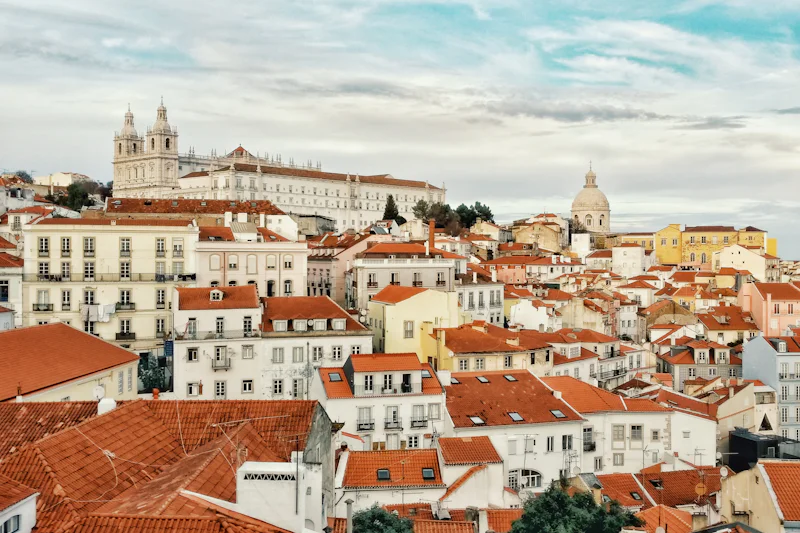
The capital of Portugal is Lisbon. Key facts about the city, why it became the capital, Portugal's former capitals and what living in Lisbon is really like.
Madeira island guide: things to do, where to stay and best time to visit
Plan a trip to Madeira, Portugal: the best things to do, levada hikes, Funchal, Porto Santo, weather by month, where to stay, food and Madeira vs Azores.
How to get from the airport to the city in Portugal: Lisbon, Porto, Faro and Madeira
How to get from the airport to the city in Portugal: metro, bus, taxi and Uber from Lisbon, Porto, Faro and Madeira airports, with prices and journey times.