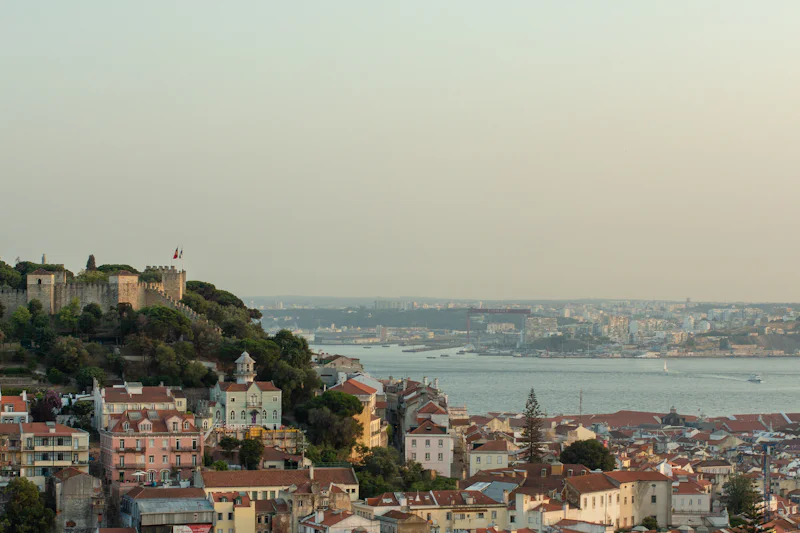
Best Places to Live in Portugal: Cities and Regions Compared
Where to live in Portugal: Lisbon, Porto, Braga, Coimbra, the Algarve, Madeira, the Azores and more compared on housing, jobs, climate and lifestyle.
Visas, residence permits and EU registration: which route applies to you and where to check the current rules.

What to sort out before you leave: documents, belongings and pets.
Where to live in Portugal: Lisbon, Porto, Braga, Coimbra, the Algarve, Madeira, the Azores and more compared on housing, jobs, climate and lifestyle.

Coming soon
A checklist for the months before moving to Portugal: documents, apostilles, money, health insurance and where to stay first.

Coming soon
Moving your household to Portugal: shipping options, customs rules for personal belongings, bringing a car and storage on arrival.

Coming soon
Bringing a dog or cat to Portugal: microchip, rabies vaccination, pet passport, rules for non-EU countries and registering your pet.
No visa needed — but a registration and a few numbers are.

Coming soon
How EU, EEA and Swiss citizens register their residence in Portugal: the CRUE certificate, where to apply and which documents to prepare.
The national visas people use most to move to Portugal.

Coming soon
The Portuguese national visa for pensions, rental and investment income (D7): who it is for, the usual requirements and how it leads to a residence permit.

Coming soon
The Portuguese visa for remote workers (D8): temporary-stay and residence options, typical requirements and what to check about tax before you move.

Coming soon
Moving to Portugal for a job with a Portuguese employer: the work visa route, the job offer and contract, applying at the consulate and AIMA.

Coming soon
Studying in Portugal from outside the EU: who needs a study visa, admission documents, proof of means and housing, and working while studying.
Life after the visa: renewals, family and the long-term path.

Coming soon
How residence permit renewals work in Portugal: when to start, how AIMA handles them, the documents usually needed and what to do while you wait.
Coming soon
Bringing your family to Portugal: who counts as a family member, the requirements for the resident sponsor, documents and the AIMA procedure.

Coming soon
Routes to Portuguese citizenship: naturalisation after legal residence, the language requirement, how to apply and recent changes to the law.
For people displaced from Ukraine.

Coming soon
Temporary protection in Portugal for people displaced from Ukraine: who qualifies, how to apply or renew with AIMA and which rights it gives.
EU, EEA and Swiss citizens can live in Portugal with a passport or national ID card. If you stay longer than three months, you register your residence and get a registration certificate, the CRUEThe registration certificate for EU, EEA and Swiss citizens who live in Portugal for more than three months. It is usually issued by the municipal council (Câmara Municipal).. This is usually handled by the municipal council (Câmara MunicipalThe municipal (town or city) council. Among other things, it usually handles registration of EU citizens (CRUE).) for your address rather than by AIMA. Check
Everyone else usually applies for a national visa (a "D visa") at a Portuguese consulate before travelling, then turns it into a residence permit (Autorização de residênciaA residence permit for non-EU nationals, issued by AIMA. It is temporary at first and has to be renewed.) in Portugal. The visa category depends on what you will do here — for example living on a pension or other passive income, remote work for employers abroad, a job with a Portuguese employer, study or family reunification. Requirements change, so check the Visa Portal for the current list for your category and consulate. Check
Communications from AIMA — by email, letter or through its portal — are the authoritative source for your own case. Keep copies of every document you submit.
Foreign certificates (birth, marriage, criminal record) often need an ApostilaAn apostille: a certificate under the Hague Convention that confirms a public document from one country for use in another. Foreign certificates often need one, plus a certified translation. and a certified translation. It is usually easier to arrange these in the country that issued them, before you leave. Most people also need a tax number, the NIFPortugal's nine-digit taxpayer number, issued by the Tax and Customs Authority (AT). You need it for leases, bank accounts, employment and most contracts., early on — see how to get a NIF.
Still choosing a city? Compare the best places to live in Portugal on housing, jobs and climate.
Where to live in Portugal: Lisbon, Porto, Braga, Coimbra, the Algarve, Madeira, the Azores and more compared on housing, jobs, climate and lifestyle.
The first number most people need — for a lease, a bank account and work.

Step-by-step guide to getting a NISS (social security number) in Portugal as a foreigner: who needs it, documents, online application and AIMA.
How to activate the Chave Móvel Digital in Portugal as a foreigner: who can get it, the gov.pt app, video call, Finanças letter, in person and PIN problems.

How to rent a flat in Portugal: where to search, documents, deposit and advance rent, the lease, tenant rights, typical rents and scams to avoid.
How healthcare works in Portugal for foreigners: getting a número de utente, booking a GP, SNS 24, emergencies, private clinics, insurance and pharmacies.
How to learn European Portuguese: free government courses for residents, the best online courses and apps, language schools, tutors and the A2 CIPLE exam.
We check our guides against these official pages. If something has changed, the official source wins.