How to get around Portugal: trains, buses and driving
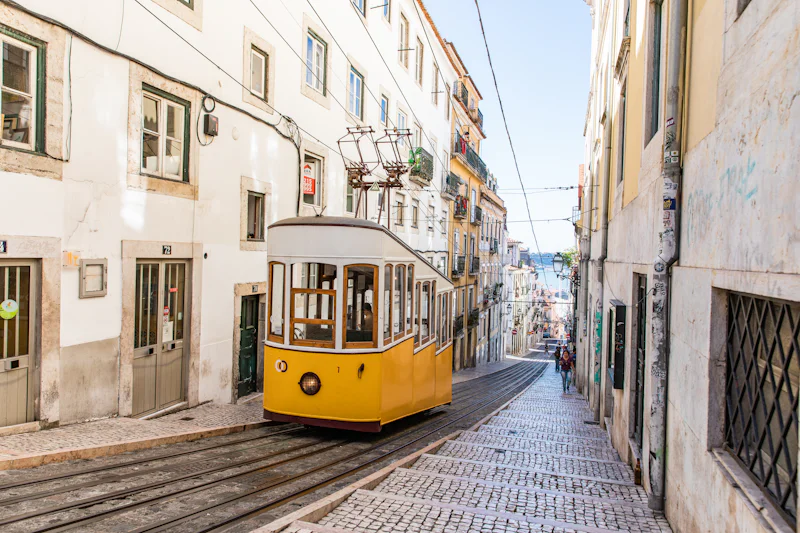
Portugal is a compact country – you can drive from north to south in about six hours – and it's easy to explore without a car if you know which transport to use. Trains connect the main cities quickly, buses reach almost everywhere else, and a rental car is the best option for the Algarve, the Alentejo and the interior.
This guide covers transportation in Portugal: trains, buses, driving, city transport, domestic flights and ferries, with tips on tickets and passes.
Quick summary:
| Route type | Best option |
|---|---|
| Lisbon ↔ Porto | Train (Alfa Pendular or Intercidades), ~3h |
| Lisbon ↔ Algarve | Train or bus, ~3h |
| Small towns and villages | Bus (Rede Expressos, FlixBus, regional operators) |
| Algarve, Alentejo, Douro Valley, interior | Car |
| Within Lisbon and Porto | Metro, bus, tram, train |
| Madeira and the Azores | Plane (ferry to Porto Santo) |
Trains in Portugal (CP)
Almost all trains are run by CP – Comboios de Portugal. The network covers the coast well but is limited in the interior.
Types of trains
| Train | Description | Example routes |
|---|---|---|
| Alfa Pendular (AP) | Fastest, most comfortable | Lisbon – Coimbra – Porto – Braga; Lisbon – Faro |
| Intercidades (IC) | Fast intercity trains | Lisbon – Porto, Lisbon – Faro, Lisbon – Évora, Lisbon – Covilhã |
| Inter-Regional (IR) | Fewer stops than regional | Porto – Régua (Douro Valley) |
| Regional (R) | Stops everywhere | Lagos – Faro – Vila Real de Santo António |
| Urbanos | Suburban trains | Lisbon to Sintra and Cascais; Porto to Aveiro and Braga |
Typical journey times and fares
| Route | Time | Standard fare (2nd class) |
|---|---|---|
| Lisbon – Porto | 2h50–3h15 | ~€25–€35 |
| Lisbon – Coimbra | 1h40–2h | ~€20–€25 |
| Lisbon – Faro | 3h–3h30 | ~€23–€30 |
| Lisbon – Évora | 1h30 | ~€12–€15 |
| Porto – Braga | 1h (urbano) | ~€3–€4 |
| Lisbon – Sintra | 40 min | ~€2–€3 |
Book early online for discounted fares on Alfa Pendular and Intercidades.
How to buy train tickets
- CP website or the myCP app (best option)
- Ticket offices and machines at stations
- Urbanos in Lisbon and Porto use the local transport cards (Navegante, Andante)
Intercity and Alfa Pendular tickets include a seat reservation. Regional and urban trains don't.
Passe Ferroviário Verde: €20 per month
If you live in Portugal, the Passe Ferroviário Verde is one of Europe's best travel deals:
- €20 for 30 days (also €40 for 60 days, €60 for 90 days)
- Valid on regional, inter-regional and Intercidades (2nd class) trains
- Since 26 September 2026, also valid on CP urban trains in Lisbon and Porto Check
- Not valid on Alfa Pendular or in Intercidades 1st class
- Intercidades journeys require a free seat reservation within 24 hours before departure
- Available to Portuguese and foreign residents
- Loaded onto a CP card (physical or digital); it can also be shown in the gov.pt or CP app
Buses in Portugal
Buses are often cheaper than trains and reach places with no railway.
Main intercity bus companies
- Rede Expressos – the largest national network, connecting hundreds of towns
- FlixBus – cheap fares on major routes and to Spain
- Renex / Citi Express – some intercity routes
- Regional operators – EVA/Vamus (Algarve), Transdev, Rodoviária do Oeste, Rodonorte and others
How to buy bus tickets in Portugal
- Online on the company's website or app (usually cheapest)
- At bus station ticket offices
- Sometimes from the driver on regional buses (cash may be required)
Typical bus fares
| Route | Time | Fare |
|---|---|---|
| Lisbon – Porto | 3h15–3h45 | €8–€20 |
| Lisbon – Faro | 3h30–4h | €10–€22 |
| Lisbon – Nazaré | 1h45–2h | €10–€14 |
| Porto – Braga | 1h | €5–€8 |
| Lisbon – Fátima | 1h30 | €10–€14 |
Main bus stations
- Lisbon: Sete Rios, Oriente, Campo Grande
- Porto: Campo 24 de Agosto and the Batalha area, plus Casa da Música for some services
- Faro: central bus terminal next to the marina
Driving in Portugal
A car gives you the most freedom, especially for the Algarve coast, Alentejo, Douro Valley, Serra da Estrela and small villages.
Renting a car
- Rental is cheap in winter and expensive in July–August.
- You'll need a credit card for the deposit.
- Check whether the car includes a toll device (Via Verde) – it saves a lot of hassle.
- Drivers usually need to be 21–25+ and have held a licence for at least a year.
- Living here on a foreign licence? See how to exchange it.
Tolls
Many motorways (autoestradas, marked "A") have tolls:
- Traditional toll booths: take a ticket and pay on exit (cash or card).
- Electronic-only tolls: no booths – your plate is photographed. Pay with a Via Verde device, register a foreign card at the border (Easytoll), or pay later at a CTT post office (after 48 hours, within 15 days). Check
Tolls were removed on certain former SCUT motorways (including the A22 in the Algarve) in 2025.
How the transponder works, rental-car fees and paying tolls with foreign plates: see how to use Via Verde.
Rules of the road
- Speed limits: 50 km/h in towns, 90 km/h on rural roads, 100 km/h on expressways, 120 km/h on motorways
- Drive on the right
- Alcohol limit: 0.5 g/l (0.2 g/l for new and professional drivers)
- Mandatory: reflective vest and warning triangle
- Roundabouts: traffic inside has priority
- Fines can be paid on the spot
Fuel and costs
Petrol and diesel prices in Portugal are among the higher ones in Southern Europe. Supermarket petrol stations (Continente, Intermarché, Auchan) are often cheaper.
Living here and thinking of buying a car? See owning a car in Portugal for taxes, insurance and inspections.
Getting Around Lisbon and Porto
Lisbon
- Metro – 4 lines, including a direct line to the airport
- Carris buses and trams – including the famous Tram 28
- Funiculars and the Santa Justa lift
- CP urban trains to Sintra, Cascais and the suburbs; Fertagus across the 25 de Abril Bridge
- Ferries across the Tagus to Cacilhas, Seixal, Barreiro and Montijo
Tickets: load a Navegante occasional card (€0.50) with single tickets, a 24-hour pass or "zapping" credit. Residents can buy a Navegante monthly pass that covers the whole metropolitan area.
Porto
- Metro do Porto – 6 lines, including the airport and Gaia
- STCP buses and historic trams
- CP urban trains to Braga, Guimarães and Aveiro
Tickets: the Andante card (€0.60) with zone-based tickets (Z2 for most central trips). Since 2026, registered residents of Porto municipality can travel free with the Cartão Porto. Check
Other cities
Coimbra, Braga, Faro, Aveiro and other cities have local bus networks. Coimbra also has the new Metro Mondego bus-rapid-transit line.
Ride-Hailing and Taxis
- Uber, Bolt and FreeNow operate in Lisbon, Porto, the Algarve and other major cities, usually cheaper than taxis.
- Taxis are metered and fairly cheap compared to Northern Europe; there are extra charges for luggage, phone bookings and night trips.
Domestic Flights
- Lisbon/Porto – Faro: possible, but trains and buses are often just as fast once you include airport time.
- To Madeira: flights from Lisbon (1h45) and Porto (2h) with TAP, easyJet, Ryanair and others.
- To the Azores: flights from Lisbon and Porto with SATA/Azores Airlines, TAP and Ryanair; inter-island flights with SATA Air Açores.
Ferries
- Lisbon: ferries across the Tagus (Transtejo/Soflusa).
- Setúbal – Tróia: car and passenger ferries to the Tróia Peninsula.
- Madeira – Porto Santo: daily ferry (about 2h15) on the Lobo Marinho.
- Azores: seasonal inter-island ferries (Atlânticoline), mainly in summer.
- Ria Formosa (Algarve): small ferries from Faro and Olhão to the islands.
Which Transport Should You Choose?
- City breaks (Lisbon, Porto): no car – use public transport.
- Lisbon + Porto + Coimbra: train.
- Algarve: car for beaches and villages; train or bus between main towns.
- Alentejo and interior: car.
- Douro Valley: train from Porto to Pinhão, or car.
- Living in Portugal on a budget: Passe Ferroviário Verde + city pass.
Final Thoughts
Getting around Portugal is easy and affordable. Use the train between the big cities, buses to reach smaller towns, and a car for the places public transport doesn't serve well. If you live here, the €20 Passe Ferroviário Verde can make rail travel almost absurdly cheap.
Need help?
Official bodies and services related to this guide. Sponsored listings are always labelled.
- Official Transport
CP — Comboios de Portugal
The national rail operator: suburban and regional lines (including Lisbon–Sintra and Lisbon–Cascais) and long-distance Alfa Pendular and Intercidades trains.
- Languages
- Portuguese, English
- Where
- Nationwide
- Official Transport
Metro de Lisboa
Lisbon's four-line metro, including the Red Line to Humberto Delgado Airport. Check the official site for current fares and service changes.
- Languages
- Portuguese, English
- Where
- Lisbon
- Official Transport
Carris
Operator of Lisbon's buses and historic trams, as well as the city's funiculars and the Santa Justa lift.
- Languages
- Portuguese, English
- Where
- Lisbon
Frequently asked questions
Is public transport good in Portugal?
Yes in Lisbon, Porto and along the coast. In rural areas, services can be infrequent.
Is it better to travel by train or bus in Portugal?
Trains are faster and more comfortable between big cities. Buses reach more places and are often cheaper.
Do I need a car in Portugal?
Not for cities. A car is very useful for the Algarve, Alentejo and the interior.
How do I pay tolls in a rental car?
Rent a car with a Via Verde device, register your card with Easytoll, or pay at a CTT post office.
What is the Passe Ferroviário Verde?
A €20 monthly train pass for Portuguese residents, valid on most CP trains except Alfa Pendular and first class.
Can tourists buy the Passe Ferroviário Verde?
No – it's for residents of Portugal.
Official sources
We check our guides against these official pages. If something has changed, the official source wins.
- CP — Comboios de Portugal cp.pt
- Visit Portugal visitportugal.com
Related guides

How to get from the airport to the city in Portugal: Lisbon, Porto, Faro and Madeira
How to get from the airport to the city in Portugal: metro, bus, taxi and Uber from Lisbon, Porto, Faro and Madeira airports, with prices and journey times.

How to exchange a foreign driving licence in Portugal
How to exchange a foreign driving licence for a Portuguese one: who must exchange, the 2-year deadline, documents, the online IMT process and costs.

Nazaré, Portugal: when to visit, beaches and the biggest waves in the world
Plan a visit to Nazaré, Portugal: when to see the giant waves at Praia do Norte, the best beaches, things to do, getting there from Lisbon and where to stay.
Madeira island guide: things to do, where to stay and best time to visit
Plan a trip to Madeira, Portugal: the best things to do, levada hikes, Funchal, Porto Santo, weather by month, where to stay, food and Madeira vs Azores.
Visiting Portugal as a tourist
Visiting Portugal: plan where to go with official tourism sites, get around by train and metro, and save the emergency and health advice numbers.

Credit Cards in Portugal: Best Cards for Expats and Residents
How credit cards work in Portugal: debit vs credit, Multibanco and MB WAY, interest caps, fees, and how expats can apply without a local credit history.