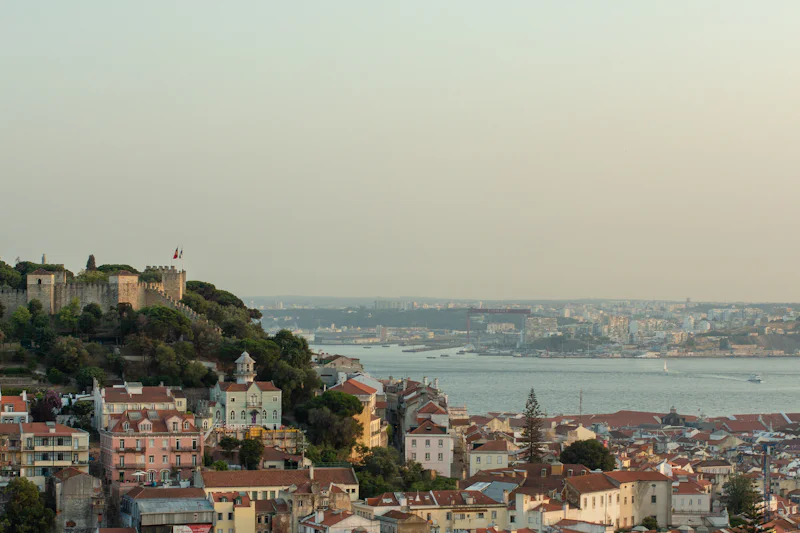
Best Places to Live in Portugal: Cities and Regions Compared
Where to live in Portugal: Lisbon, Porto, Braga, Coimbra, the Algarve, Madeira, the Azores and more compared on housing, jobs, climate and lifestyle.
Where to start
Documents for every family member, a school place and a home near it.
Moving as a family multiplies the paperwork: each family member usually needs their own numbers, and schools and health centres ask for documents about the children. Start with the certificates from your home country — birth and marriage certificates often need an ApostilaAn apostille: a certificate under the Hague Convention that confirms a public document from one country for use in another. Foreign certificates often need one, plus a certified translation. and a certified translation.
Your visa or registration route depends on your nationality: see the EU citizen route or the non-EU route for the residence steps.
Once you have an address, register everyone with the health service (healthcare in Portugal) and look for a nursery or kindergarten early — places are limited (childcare in Portugal).
A typical order — your own may differ. Tick off steps as you go.
Birth, marriage and school certificates from abroad often need an apostille and a certified translation. Arrange them in your home country before you leave.
Usually the first number you need — for a lease, a bank account and contracts.
Start with a short-term rental, then sign a registered lease. Never pay a deposit for a flat you haven't seen.
Public, private and international schools enrol differently. Start early, especially for the start of the school year.
Get your SNS user number (número de utente) at the health centre for your address.
Banks usually ask for ID, your NIF and proof of address. A Portuguese account also lets you use MB Way.
In big cities a monthly pass is usually better value than single tickets if you travel every day.
Your ticks are saved in this browser only.
Where to live in Portugal: Lisbon, Porto, Braga, Coimbra, the Algarve, Madeira, the Azores and more compared on housing, jobs, climate and lifestyle.
Childcare in Portugal for families: free creche under Creche Feliz, how to apply, public and private kindergartens (jardim de infância), costs and tips.
How healthcare works in Portugal for foreigners: getting a número de utente, booking a GP, SNS 24, emergencies, private clinics, insurance and pharmacies.
How home insurance works in Portugal: mandatory fire cover, multirriscos policies, earthquake cover, typical costs, main insurers and how to make a claim.
Property taxes in Portugal: 2026 IMT transfer tax brackets, IMT Jovem, stamp duty, the annual IMI and AIMI, with a worked example for a €250,000 home.
How rental deposits (caução) work in Portugal: the legal cap, advance rent, guarantors, getting your deposit back, tenant rights and the proposed 2026 reform.